
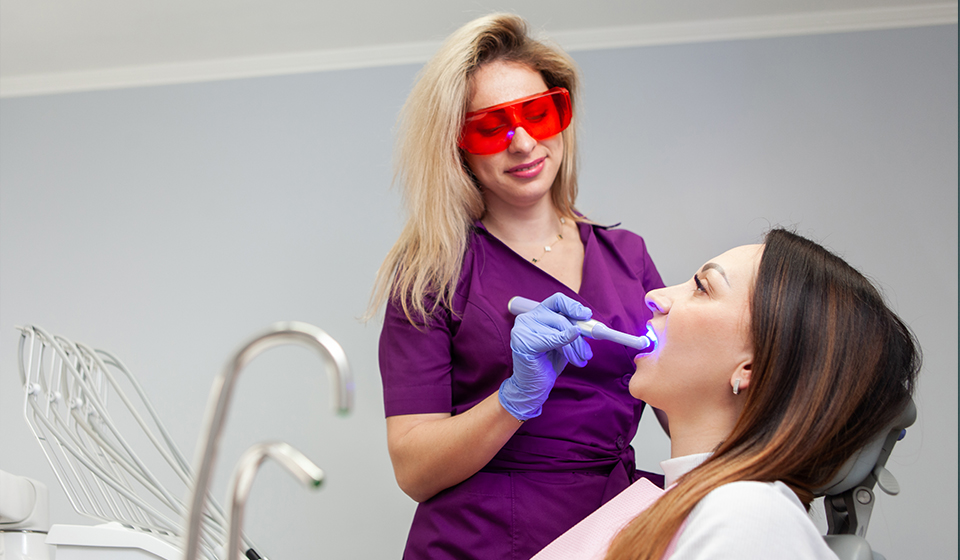
Teeth whitening is one of the most popular cosmetic dental treatments for achieving a brighter, more confident smile. Whether performed in-office or with professional take-home kits, whitening treatments can effectively remove stains and discoloration. However, temporary tooth sensitivity is a common side effect.
Sensitivity after teeth whitening typically occurs because the whitening agents penetrate the enamel to break down stains, temporarily exposing the dentin layer beneath. This can lead to short-lived discomfort when consuming hot, cold, or sweet foods and beverages. The good news is that this sensitivity is usually mild and manageable.
How to manage sensitivity after teeth whitening
Use a desensitizing toothpaste
Switching to a toothpaste formulated for sensitive teeth can significantly reduce discomfort. These toothpastes contain ingredients that help block pain signals from reaching the nerves inside the teeth.
For best results:
- Use the toothpaste consistently for several days after whitening
- Brush gently using a soft-bristle toothbrush
- Avoid aggressive scrubbing, which can worsen sensitivity
Desensitizing toothpaste can also be used before future whitening treatments as a preventive measure.
Avoid extremely hot or cold foods and drinks
After whitening, teeth may be more reactive to temperature changes. Limiting exposure to very hot coffee, iced beverages, soups, or frozen desserts can help prevent triggering discomfort.
Instead, choose:
- Room temperature water
- Lukewarm beverages
- Mild foods that are not overly hot or cold
This simple adjustment can make a noticeable difference during the first 24 to 48 hours following treatment.
Stay away from acidic and sugary foods
After teeth whitening, enamel can become temporarily more porous, making teeth more vulnerable to irritation. Acidic and sugary foods can aggravate sensitivity and weaken enamel during this recovery period. Items such as citrus fruits, carbonated beverages, sports drinks, tomato-based sauces, and processed sweets may intensify discomfort and prolong sensitivity.
Choosing a balanced diet that supports enamel health can make a noticeable difference. Focus on mild, non-acidic foods such as lean proteins, whole grains, vegetables, and dairy products, which provide essential nutrients like calcium. Drinking plenty of water also helps neutralize acids and maintain a healthy oral environment.
Take a break between whitening sessions
Overusing whitening products can increase enamel irritation and tooth sensitivity. Following professional recommendations regarding the frequency and duration of treatments is essential to protect enamel and maintain oral health. Excessive or closely spaced whitening sessions may weaken enamel temporarily and prolong discomfort.
If sensitivity develops, allow teeth sufficient time to recover before resuming treatment. Most post-whitening sensitivity improves within a few days as the enamel rehydrates and stabilizes. Spacing out whitening sessions not only reduces the risk of irritation but also supports safer, more consistent, and longer-lasting results.
Consult a dental professional if sensitivity persists
Mild sensitivity after whitening is normal and temporary, often resolving as the teeth naturally rehydrate and enamel regains balance. However, if discomfort is severe, interferes with eating or drinking, or lasts longer than a few days, professional evaluation may be necessary. Prolonged sensitivity can sometimes signal underlying enamel weakness or other dental concerns that require attention.
A dental provider can:
- Assess enamel health: The dentist will examine the strength and condition of the enamel to determine whether thinning, wear, or erosion is contributing to heightened sensitivity.
- Suggest alternative whitening methods: If sensitivity is significant, a gentler whitening approach or adjusted treatment schedule may be recommended to achieve results more comfortably.
- Identify underlying issues such as cavities or gum recession: Hidden decay, small cracks, exposed roots, or receding gums can increase sensitivity and may need treatment before continuing any whitening procedure.
Professional guidance ensures that whitening treatments are carefully monitored to minimize sensitivity, protect enamel integrity, and deliver consistent, long-lasting results. Choosing an experienced provider such as Unident Family Dentistry in Houston helps ensure that teeth whitening is performed with precision and patient comfort in mind. With professional oversight and personalized care, patients can achieve a brighter smile while maintaining strong enamel and supporting long-term oral health.
Final thoughts
Sensitivity after teeth whitening can be uncomfortable, but it is typically temporary and manageable with the right approach. Simple adjustments such as using desensitizing toothpaste, avoiding extreme temperatures, limiting acidic and sugary foods, and spacing out whitening sessions can significantly reduce discomfort while allowing enamel to recover properly.
If sensitivity persists or concerns arise, seeking professional evaluation ensures that any underlying issues are addressed promptly. With proper care and guidance, teeth whitening can remain a safe, effective, and confidence-boosting cosmetic solution that supports long term oral health.
Frequently asked questions
Is tooth sensitivity after whitening normal?
Yes, temporary sensitivity is a common side effect of whitening treatments. It occurs because the whitening agents penetrate the enamel to remove stains, temporarily exposing the dentin layer.
What helps reduce sensitivity quickly?
Using a desensitizing toothpaste, avoiding very hot or cold foods and drinks, and limiting acidic or sugary items can help minimize discomfort.
Should whitening be stopped if sensitivity occurs?
If sensitivity becomes uncomfortable, it is advisable to pause treatment and allow the teeth time to recover. Spacing out sessions can help protect enamel and reduce irritation.
Can whitening damage enamel?
When performed according to professional guidelines, whitening treatments are considered safe and do not permanently damage enamel.
When should a dentist be consulted about sensitivity?
Professional evaluation is recommended if sensitivity is severe, worsens over time, or lasts longer than a few days. Persistent discomfort may indicate enamel wear, cavities, or gum recession that requires attention.