
A healthy smile plays an important role in both appearance and overall oral health. Teeth are designed to withstand daily pressure from chewing and speaking, but they can still experience damage. Over time, decay, large fillings, grinding, or infection can weaken the natural structure of a tooth. When a tooth loses significant strength, it becomes vulnerable to cracking, breaking, or further decay.
A dental crown is one of the most effective restorative treatments available to rebuild and protect compromised teeth. By fully covering the visible portion of the tooth, a crown restores durability, function, and appearance while preventing additional damage.
What is a dental crown?
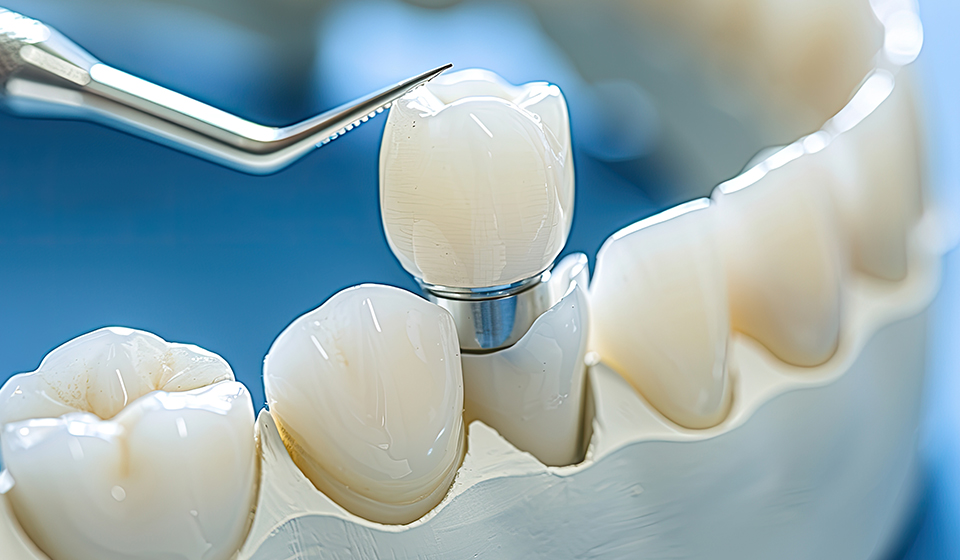
A dental crown is a custom-made, tooth-shaped cap that is placed over a prepared tooth. It completely encases the visible portion above the gum line, acting as a protective outer layer. Unlike a dental filling, which repairs only a small portion of the tooth, a crown restores the entire surface. This full coverage design allows the tooth to regain strength and stability.
Dental crowns can be made from several materials, each selected based on location, bite pressure, and aesthetic goals. The goal is to create a restoration that blends seamlessly while providing long-lasting support.
How do dental crowns restore damaged teeth?
Dental crowns provide both structural and functional benefits by fully covering and protecting compromised teeth while restoring their natural performance and appearance.
Enhancing natural appearance
Modern dental materials such as porcelain are carefully selected and customized to match the color, translucency, and contour of surrounding teeth. This ensures the crown blends seamlessly into the smile while restoring both confidence and aesthetics.
Reinforcing tooth strength
When enamel is weakened due to decay, fractures, or large fillings, the tooth becomes vulnerable to pressure from chewing. A crown acts like a protective helmet, absorbing and evenly distributing biting forces to reduce the risk of cracks, splits, or further structural breakdown.
Providing full coverage protection
Since a crown covers the entire visible surface of the tooth, it creates a secure barrier that seals and shields the remaining natural structure from bacteria, food particles, temperature sensitivity, and additional decay. This protection helps extend the lifespan of the treated tooth.
Restoring proper bite function
Damaged teeth can disrupt normal chewing patterns and place extra strain on surrounding teeth and jaw joints. A crown restores the tooth’s correct shape, size, and height, promoting balanced bite alignment, improved chewing efficiency, and greater overall comfort.
Preserving natural tooth structure
Rather than removing the tooth entirely, a crown allows the dentist to retain as much healthy tooth structure as possible. By reinforcing what remains, the crown supports long-term stability while preventing the need for more extensive procedures.
Long-term benefits of dental crowns
Dental crowns are designed to be durable and reliable. With proper care and regular dental visits, they can last many years. Key benefits include:
- Protection against further structural damage
- Improved chewing efficiency
- Reduced tooth sensitivity
- Enhanced smile aesthetics
- Prevention of more complex procedures
Maintaining professional cleanings and examinations allows early detection of any wear or minor concerns before they become major issues.
Conclusion
Dental crowns are a trusted and effective solution for restoring damaged teeth by reinforcing strength, providing full-coverage protection, and improving both function and appearance. By preserving natural tooth structure and restoring proper bite alignment, crowns help patients maintain long-term oral health and comfort. With advancements in dental materials, modern crowns deliver durability and aesthetics that closely mimic natural teeth, making them a versatile choice for a range of restorative needs.
Choosing the right dental provider plays an important role in achieving long-lasting results. At Unident Family Dentistry in Houston, you receive personalized restorative care designed to protect and strengthen your smile. The team focuses on detailed treatment planning, high-quality materials, and modern techniques to ensure crowns fit comfortably and function naturally.
Frequently asked questions
Does getting a dental crown hurt?
The procedure is typically performed under local anesthesia, ensuring comfort during treatment. Mild sensitivity may occur afterward but usually resolves within a few days.
Can a crowned tooth still get decay?
Yes, decay can still develop near the gum line if proper oral hygiene is not maintained. Regular brushing, flossing, and professional cleanings help prevent this issue.
What should be avoided after receiving a dental crown?
It is recommended to avoid chewing very hard objects such as ice or hard candy, as excessive pressure can damage the crown.
How long does the dental crown procedure take?
Crown treatment usually requires two visits spaced about one to two weeks apart. The first visit involves tooth preparation and impressions, while the second visit focuses on permanent placement.
Why Choose Dental Professionals for Crowns?
Dental professionals bring expertise, experience, and precision to every crown restoration. They can accurately assess the extent of tooth damage, select the best materials, and ensure a proper fit.