
A bright smile is one of the first things people notice, but deep tooth stains can make even healthy teeth look dull and aged. Not all discoloration responds to store-bought products or home remedies. Deep stains require stronger, science-backed solutions delivered under professional supervision. Teeth Whitening in Houston has become one of the most effective options for patients who want real, visible change instead of temporary improvement. Professional whitening uses advanced formulas and controlled techniques to lift stubborn discoloration safely. With the right approach, even long-standing stains can be dramatically reduced. Understanding how this process works helps you make a confident and informed decision.
Understanding Deep Tooth Stains and Teeth Whitening
Deep stains are different from surface stains. Surface stains sit on the outer enamel and often come from coffee, tea, wine, or smoking. These may respond to whitening toothpaste or strips. Deep stains, however, are embedded within the enamel or dentin layer and require professional teeth whitening methods to break them down.
Deep discoloration typically develops due to:
- Long-term tobacco use
- Heavy coffee, tea, or red wine consumption
- Certain medications
- Aging enamel thinning
- Old dental trauma
- Excess fluoride exposure during tooth development
Because these stains penetrate below the surface, they cannot be fully removed with low-strength whitening agents.
Why Store Products Fail on Deep Stains
Teeth Whitening Strength Matters
Over-the-counter whitening kits are designed for safety across the general population. That means their active ingredient levels are intentionally limited. While they may slightly improve mild yellowing, they usually cannot reach deep stain molecules inside the tooth.
Common limitations of store products include:
- Low peroxide concentration
- Short contact time with teeth
- Poor tray fit causing uneven results
- Increased sensitivity without strong results
- Repeated use with minimal change
Professional teeth whitening systems are designed differently. They combine higher-strength whitening agents with protective protocols that keep your teeth and gums safe.
How Professional Teeth Whitening Breaks Down Deep Stains
The Chemistry Behind Teeth Whitening
Professional teeth whitening works through oxidation. Whitening gels contain peroxide compounds that release oxygen molecules. These molecules penetrate enamel and dentin, breaking apart stain compounds at a microscopic level. Once broken down, the stains reflect less light — and teeth appear brighter.
What makes professional treatment more effective:
- Higher concentration whitening gel
- Controlled isolation of gums
- Longer active treatment cycles
- Light or heat activation when appropriate
- Real-time shade monitoring
This analytical, layered approach is what allows professional teeth whitening to target deep discoloration rather than just surface staining.
Types of Professional Teeth Whitening for Deep Stains
In-Office Teeth Whitening Treatments
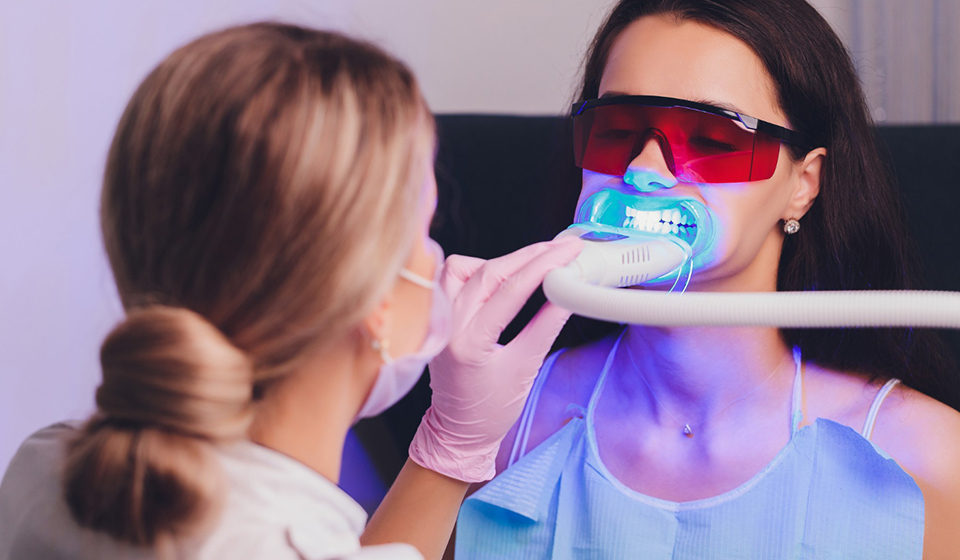
In-office teeth whitening is the fastest and most powerful option for deep stains. Treatment is completed in a single visit or a short series of visits. Dentists apply a professional-grade gel and may use a specialized light to accelerate stain breakdown.
Benefits include:
- Rapid shade improvement
- Even whitening across all visible teeth
- Reduced risk of gum irritation
- Immediate visible results
- Custom strength adjustment based on stain severity
Patients with deep stains often see multiple-shade improvement in one appointment.
Custom Take-Home Teeth Whitening Systems
For some deep stains, dentists recommend professional take-home kits with custom trays. These are different from store kits because they are precisely molded to your teeth and use stronger whitening formulas.
Advantages of custom tray whitening:
- Even gel distribution
- Better tooth contact
- Reduced gel leakage
- Gradual, controlled brightening
- Ideal for layered stain removal
This method is often used after in-office teeth whitening to enhance and stabilize results.
Teeth Whitening Evaluation Before Treatment
Analytical Shade and Stain Assessment
Deep stains are not all the same. A proper evaluation determines the stain type, depth, and cause before selecting a whitening strategy. This analytical step improves predictability and reduces trial-and-error treatment.
Dentists examine:
- Enamel thickness
- Existing restorations
- Stain color (yellow, brown, gray, blue)
- Sensitivity risk
- Gum health
- Bite patterns
Some deep gray or medication-related stains may require combined cosmetic approaches, but many respond well to staged professional teeth whitening.
Managing Sensitivity During Teeth Whitening
Modern Teeth Whitening Comfort Protocols
One reason people hesitate is fear of sensitivity. Modern professional teeth whitening includes built-in safeguards that significantly reduce discomfort.
Sensitivity control methods include:
- Pre-treatment desensitizing gels
- Gum barrier protection
- Adjusted peroxide strength
- Shorter treatment intervals
- Post-whitening mineral treatments
Most patients experience only mild, temporary sensitivity — far less than expected.
Habits That Affect Teeth Whitening Results
Protecting Your Whitening Investment
Deep stains often develop from long-term habits. After professional teeth whitening, behavior plays a major role in maintaining results.
To extend whitening effects:
- Limit dark beverages for 48 hours after treatment
- Use a straw for staining drinks
- Rinse after coffee or tea
- Avoid smoking
- Maintain regular cleanings
- Use dentist-recommended maintenance products
Whitening is not just a procedure — it is part of a broader smile maintenance strategy.
Who Is a Strong Candidate for Professional Teeth Whitening
When Teeth Whitening Works Best
Professional teeth whitening is effective for most healthy adults and many teens, but candidacy depends on oral condition and stain source.
Strong candidates typically have:
- Natural teeth without large visible fillings
- Yellow or brown deep stains
- Healthy gums
- No active decay
- Realistic shade expectations
Patients with crowns or veneers may need shade-matching strategies instead of whitening on those teeth.
The Value of Supervised Teeth Whitening
Professional whitening is not just stronger — it is smarter. Treatment is adjusted based on tooth response, stain resistance, and patient comfort. That clinical oversight reduces risk while maximizing visible improvement.
Compared with unsupervised whitening, professional care offers:
- Customized protocols
- Real-time monitoring
- Predictable outcomes
- Lower complication risk
- Better shade consistency
For deep stains, supervision is often the difference between disappointment and dramatic improvement.
Final Thoughts on Removing Deep Stains with Teeth Whitening
Deep tooth stains require more than generic solutions — they require professional analysis, stronger whitening science, and carefully managed treatment. With modern clinical systems, stubborn discoloration that once seemed permanent can now be significantly reduced. Patients who pursue Teeth Whitening in Houston through professional care benefit from safer chemistry, better technology, and customized treatment design. At Unident Family Dentistry in Houston, our experienced team delivers results-driven teeth whitening with precision, comfort, and a patient-first mindset — helping you move from stained to stunning with confidence.