

As a parent, the best way to help ensure your child has a lifetime of healthy teeth is to help them establish great dental hygiene habits as they grow.
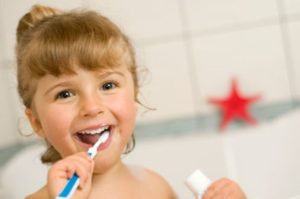
Here are some useful tips for keeping your child engaged by making dental hygiene fun:
Pick out a special toothbrush.
One great way to keep your child excited about brushing is to allow him or her to choose their own toothbrush in a favorite color or branded with a favorite cartoon character. Child-size soft-bristled brushes come in a wide variety of options designed to make your child like their toothbrush.
Choose children’s toothpaste.
Another great option is to use a toothpaste that is designed for kids. While adults generally prefer the fresh mouth taste of a minty toothpaste, many children find mint to be too powerful a flavor. This can make brushing unpleasant or even painful to sensitive taste buds. Instead, let your child choose a children’s toothpaste. There are many options available in a variety of soft mint, fruity, and bubble gum flavors. It is much easier to keep your child brushing for a full two minutes when their toothpaste tastes good.
Use a timer.
Two minutes can seem like a long time to a child. It can be very difficult for your child to try to estimate or count how long to brush without some kind of visual aid. You can help your child stay more engaged and ensure a full two minutes of brushing by using a timer. Choices range from a small sand timer your child can flip over, to a manual stopwatch with buttons to press, or even an app on a phone or tablet to time digitally (if your child is old enough). By letting your child take control of the timer, they can be more confident and more engaged in their brushing.
Brush together.
A parent is the first and strongest role model for their child. Brushing together can help your child model your great brushing technique, which will improve their own. Additionally, brushing together emphasizes to your child that brushing is important. When your child sees that you take dental hygiene seriously, they are likely to follow suit.
For more tips on making dental hygiene fun for your child, contact our office.






 A canker sore can make eating, drinking, and talking difficult and even painful. Maintaining your oral health by brushing and flossing may also be difficult with a sore in your mouth, but keeping up with your daily oral hygiene routine is an important step in the healing process. We’ve put together a short guide to everything you need to know about canker sores.
 X-rays, or radiographs, have long been used in dentistry. Traditional film x-rays are a safe and effective part of your dental care, but they do require a small amount of radiation. In our office, we utilize digital x-ray technology that provides the benefits of film imaging but uses up to 80% less radiation. With our advanced digital radiographs, we can view your teeth and surrounding structures with remarkable accuracy.
 Oral health is important at every stage in life. Just because your children are going to lose their primary (baby) teeth eventually doesn’t mean that we can ignore the importance of dental care. Tooth decay can be painful and uncomfortable to treat. To protect your child’s smile, it is vital to understand optimal preventive care.